Explore amazing listings on the HVAC Jobs Only website today
A Comprehensive Guide to Heating And Cooling Jobs: Abilities, Training, and Task Potential customers
The heating and cooling industry is a dynamic area that needs an unique collection of skills and training. Experts must possess solid interaction and analytic capacities while paying close focus to information. Occupation training and accreditations are crucial for those looking to enter this sector. As demand for energy-efficient modern technologies expands, so do task prospects. Comprehending the paths and requirements can open up diverse possibilities within this market. What are the key variables that can influence career innovation?
Important Skills for Cooling And Heating Professionals
Technological understanding is vital, Heating and cooling professionals need to likewise possess a diverse set of important skills to be successful in their area. Communication skills are critical, as specialists often communicate with customers to describe complex problems and services in reasonable terms. Analytical capabilities are just as vital; specialists must diagnose and deal with a/c system breakdowns successfully.

Furthermore, strong focus to information guarantees that installments and repair work are completed properly, reducing potential concerns. Physical endurance and mastery are required, offered the needs of the task, including lifting heavy devices and functioning in restricted rooms.
Time management skills permit heating and cooling specialists to focus on tasks successfully, guaranteeing timely service delivery. Ultimately, versatility is crucial in a rapidly developing sector where new technologies and practices emerge regularly. Collectively, these abilities enhance an a/c expert's effectiveness, ensuring they fulfill customer requirements while keeping high criteria of service.

Training and Certification Requirements
To master the heating and cooling sector, individuals must undertake certain training and obtain pertinent accreditations that validate their abilities and understanding. Commonly, aspiring HVAC professionals start with a senior high school diploma or equivalent, followed by professional training or an associate level in a/c technology. These programs usually cover basic principles, system style, and fixing techniques.
In addition to official education and learning, getting certifications from recognized companies, such as the Environmental Security Firm (EPA) and North American Specialist Excellence (NATE), is essential. EPA certification is necessary for handling cooling agents, while NATE qualification shows effectiveness in various heating and cooling subjects.
Hands-on experience via internships or instructions additionally enhances an individual's certifications. Continual education is also crucial, as the HVAC industry develops with brand-new innovations and laws. By fulfilling these training and accreditation demands, individuals place themselves for success in an affordable work market.
Job Paths in the Cooling And Heating Industry
With the essential training and qualifications in location, people can check out different occupation courses within the HVAC sector. Usual functions include heating and cooling specialist, who carries out upkeep, repair services, and setup of home heating, air flow, and a/c systems. Another alternative is becoming a HVAC engineer, focusing on system style and efficiency, commonly requiring innovative education in design concepts.
Furthermore, people might go after sales roles, specializing in cooling and heating services and products, which require solid communication skills and technological understanding. Some might pick to progress into monitoring settings, looking after groups and jobs while ensuring conformity with sector requirements. Chances exist in power auditing, where specialists analyze energy usage in buildings and advise renovations. Each course provides unique difficulties and rewards, satisfying diverse ability and rate of go to website interests within the a/c field.
Work Potential Customers and Work Opportunities
The a/c industry flaunts a strong need for qualified experts, driven by the ongoing demand for environment control systems in domestic, commercial, and commercial setups. As power effectiveness and ecological sustainability become increasingly crucial, the demand for experienced technicians remains to rise. Task leads are specifically favorable for those with specialized training and certifications, as companies seek individuals with the most current expertise in energy-efficient technologies and wise HVAC systems.
According to market reports, the work of cooling and heating professionals is predicted to grow substantially over the following decade, showing the market's durability also during financial changes. Additionally, as older systems need replacement and brand-new buildings emerge, chances encompass both skilled specialists and newcomers. Numerous heating and cooling companies are also expanding their solutions, developing further openings (HVAC Jobs Only jobs). In general, individuals entering the cooling and heating area can anticipate a durable work market, with enough opportunities for growth and security
Tips for Advancing Your A/c Career
As experts browse their a/c jobs, pursuing continuous education and specialized training can considerably boost Related Site their innovation potential customers. Involving in certification programs, such as those offered by North American Professional Excellence (NATE) or the Refrigeration Solution Engineers Culture (RSES), can considerably improve a specialist's reputation and knowledge base. Networking within the industry is equally vital; attending trade convention, workshops, and neighborhood market events can open doors to brand-new opportunities and cooperations.
In addition, gaining experience in diverse locations, such as commercial systems or energy effectiveness innovations, allows technicians to come to be well-rounded experts - HVAC Jobs Only job board. Creating soft skills, consisting of communication and analytical abilities, is essential for those going for managerial or monitoring functions. Staying educated about industry trends and arising innovations assurances that Heating and cooling specialists remain affordable in a rapidly evolving area, placing them for long-term occupation success.
Frequently Asked Inquiries
What Is the Ordinary Income for HVAC Technicians?
The typical salary for cooling and heating technicians differs by area and experience but typically varies in between $40,000 and $60,000 every year. Factors such as certifications and specialization can significantly influence making prospective in this field.
Exist Specialized Cooling And Heating Area to Take Into Consideration?
Yes, there are specialized cooling and heating fields, including household, commercial, and industrial cooling and heating, as well as areas like refrigeration, power monitoring, and interior air high quality. Each field of expertise supplies one-of-a-kind skills and career possibilities within the sector.
Exactly How Can I Find Heating And Cooling Job Openings?
To locate a/c work openings, individuals ought to explore on the internet task boards, company internet sites, industry-specific discussion forums, and regional trade colleges. Connecting with experts in the field can additionally reveal hidden possibilities and possible task leads.
What Tools Are Vital for HVAC Work?
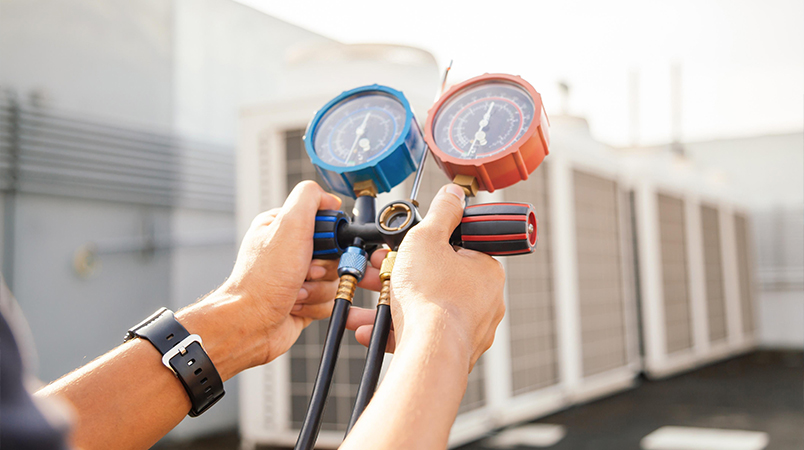
Vital devices for heating and cooling job include multimeters, cooling agent evaluates, monkey wrench, air pump, and leakage detectors. These tools make it possible for professionals to identify, fix, and keep heating, air, and ventilation conditioning systems efficiently and efficiently.
Can I Operate In Heating And Cooling Without Certification?
Yes, one can operate in heating and cooling without qualification, although chances might be limited. Several employers like certified prospects, and individuals without certification may discover it HVAC Jobs Only jobs challenging to advance in their jobs or gain access to particular job positions.
To succeed in the A/c industry, people have to undertake particular training and get pertinent accreditations that confirm their skills and understanding. Typically, aiming HVAC professionals start with a high college diploma or matching, followed by employment training or an associate level in Cooling and heating technology. With the needed training and accreditations in location, people can discover various career paths within the Cooling and heating sector. According to market records, the employment of Cooling and heating service technicians is forecasted to expand substantially over the next decade, showing the market's durability also throughout financial changes. Yes, there are specific A/c areas, consisting of domestic, business, and industrial HVAC, as well as locations like refrigeration, power management, and interior air high quality.